


Bargaining for the Future
- May 20
- 2 min read
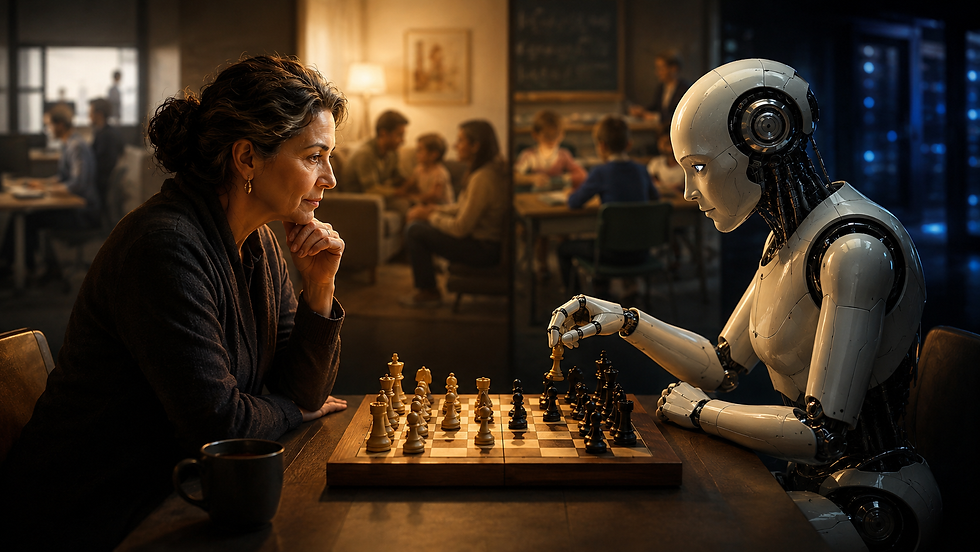
Today I am writing from the place where everything started for me.
I sit perched on pillows, on my childhood bed, with the laptop on my knees. From this corner of my family’s 120-year-old house in Bucharest, history — both mine and the world’s — is tinted by nostalgia. This house has seen two world wars, the rise and fall of fascism, Soviet rule, fifty years of communism, and an eternity of human ebbs and flows. Marriages, births, celebrations, funerals. Rinse and repeat.
The walls, one foot thick and made of red brick covered in plaster and stucco, keep much of the noise out, and some of the summer heat. They also seem to hold memory differently. From here, the political theater unfolding in Europe’s and America’s capitals feels like another turn in a centuries-long cycle of self-serving ideologies eventually translating into the unpleasant reality of higher food prices and gas bills, and into colorful commentary around the dinner table.
Solidly distrustful of both East and West, regular citizens ride the wave of relative prosperity ushered in by EU membership while spinning tales of ever-thickening deep-state plots. AI-related slang has already entered the general vocabulary. There are rumors of layoffs, too, though from here, AI looks like another dot on the crest of a surging historical cycle.
But for me, straddling as I do two worlds - Bucharest and Los Angeles, old Europe and American technological acceleration - AI feels less like a dot and more like the question underneath almost every other question. How much of it can we absorb as a society and still remain viable? How much intelligence, labor, and decision-making can be transferred into machines before the bargain between people and institutions begins to change?
It suddenly strikes me that we rarely draw a parallel between AI and immigration, although the comparison is revealing precisely because it is imperfect. Immigrants are human beings, not tools. They carry rights, histories, obligations, griefs, and hopes. Why is it that many societies fear immigration but welcome AI with comparatively little resistance? Is it because AI offers the illusion of control? Because we believe we can somehow negotiate the “right” amount of AI in the marketplace - with governments, with corporations, with platforms, with ourselves?
But can we? And, more importantly, who is the “we” in that sentence?
That is why I find myself thinking not only about AI, but about bargaining power. Who gets to negotiate the terms of this transition? The companies building the systems? The governments trying to regulate them? The future of AI may not be decided only by what machines can do. It may be decided by what human beings still have the power to negotiate.


